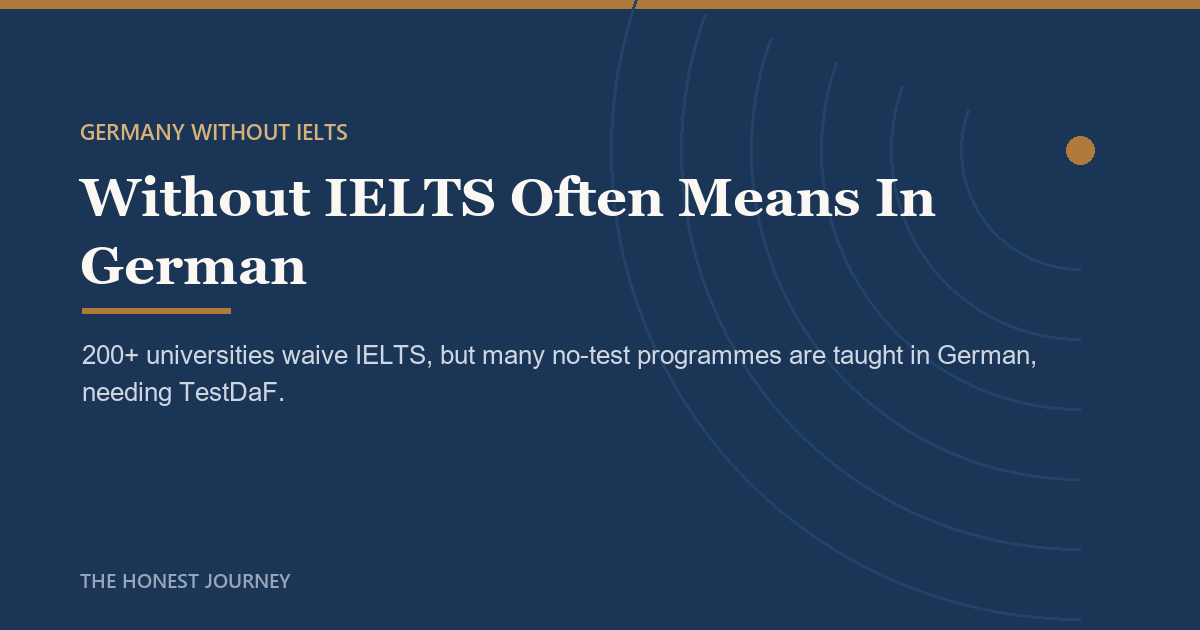
Short answer. Germany is one of the most searched destinations for studying without IELTS, and it is easy to see why. Over 200 German universities accept a Medium of Instruction letter instead of the test, and public universities charge close to zero tuition. Free degree, no English test. The pitch writes itself.
The pitch also hides the one thing that matters most, and it is specific to Germany. A large share of “study in Germany without IELTS” results are programmes that need no English test because they are not taught in English. They are taught in German, and they need a German test that is harder to pass than IELTS ever was. This page is the honest version.
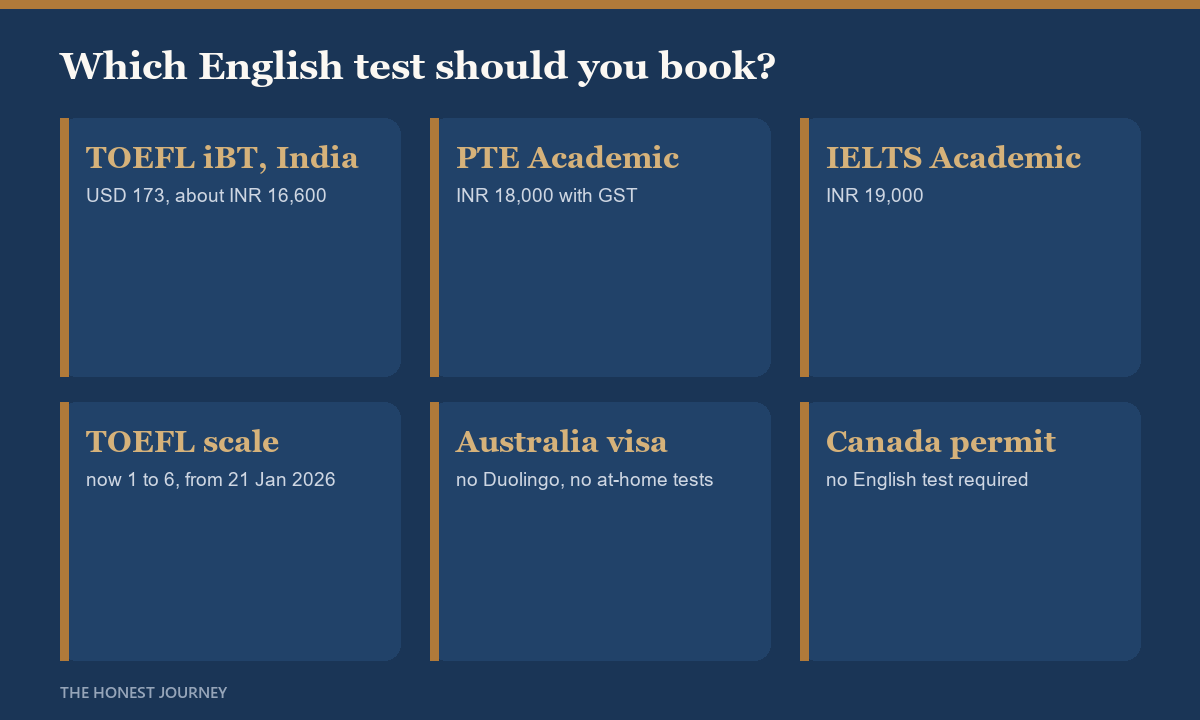
German universities read PTE and TOEFL too: compare the four English tests on fees and acceptance.
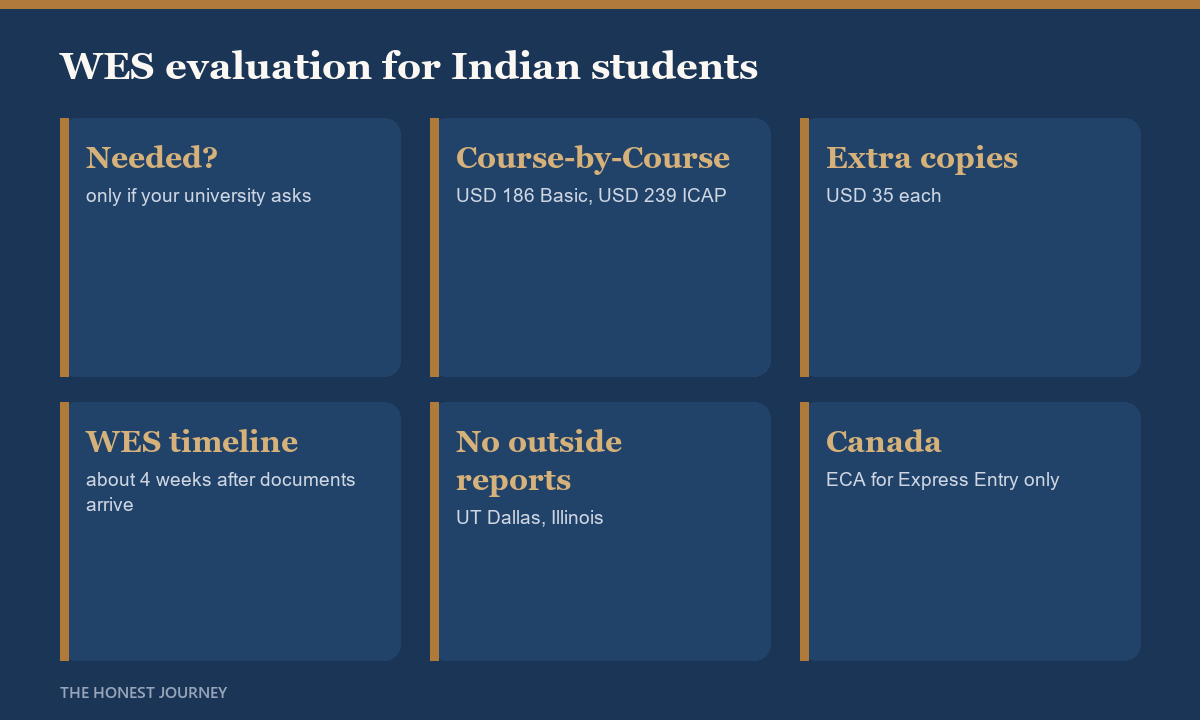
Some German technical universities ask Indian applicants for the GRE or GATE. See the GRE requirement for an MS in Germany.
The same question, by country
The waiver is easy everywhere and the catch is different everywhere. If another country is on your list, start there, or see the study abroad without IELTS hub.
The catch, stated plainly
“Without IELTS” quietly splits into two very different situations in Germany, and the difference decides your whole plan.
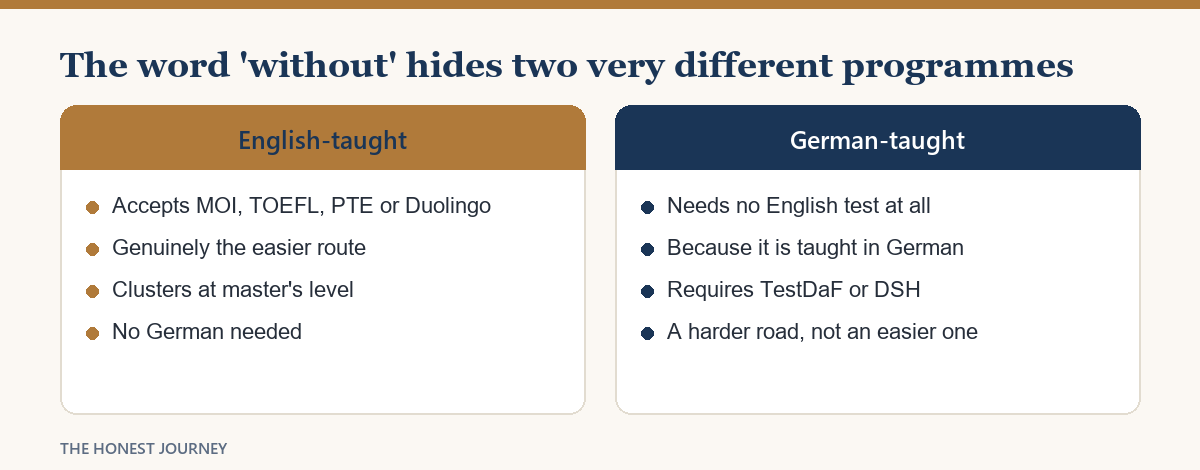
English-taught programmes that accept an alternative to IELTS. These exist, many of them at master’s level, and they will often take an MOI letter, TOEFL, PTE or Duolingo. This is the genuine no-test-hassle route, and it is what most applicants think they are getting.
German-taught programmes that need no English test at all. These make up a large share of German higher education, especially at undergraduate level and at the cheapest public universities. They do not ask for IELTS because English is not the language of instruction. What they ask for instead is proof of German, through TestDaF or DSH, at a level far beyond casual fluency.
So a search result that says “no IELTS” can mean “no English needed because the whole degree is in German”. That is not the easier path. It is a much harder one wearing an easier headline.
Faz's ruleIn Germany, without IELTS often means with TestDaF. The programme skips the English test because it is taught in German, which needs a harder test you may not have noticed you signed up for.
The free German degree that needs no English test is frequently the one taught entirely in German. Check the language of instruction before you celebrate the missing IELTS.
How to tell which one you are looking at
One question settles it: what is the language of instruction for this specific programme. Not the university, the programme.
Many German universities offer both German-taught and English-taught versions of similar degrees. The English-taught ones are usually clearly labelled, often at master’s level, and increasingly common in engineering, computer science and management. The German-taught ones dominate at undergraduate level and at the smaller public universities.
If the programme page lists TestDaF or DSH as a requirement, it is a German-taught programme and IELTS was never relevant. If it lists TOEFL, IELTS, PTE or an MOI as options, it is English-taught and the no-IELTS route is real for you.
What English-taught German programmes actually accept
For the genuinely English-taught programmes, Germany is applicant-friendly. The common alternatives to IELTS are:
- A Medium of Instruction letter, accepted by over 200 universities, confirming your prior education was in English.
- TOEFL or PTE, widely accepted where a test is wanted.
- Duolingo, accepted by a growing number of universities.
- The university’s own assessment, at some institutions.
And because your university accepting an alternative generally satisfies the German student visa too, the two-gate problem that catches UK applicants is milder here. If the university admits you on an MOI for an English-taught programme, the visa usually follows without a separate English test. Confirm it, but it is the more forgiving system.
English-taught or German-taught, side by side
The whole decision fits in one comparison. Read the row that matches your programme, not your hope.
| Factor | English-taught programme | German-taught programme |
|---|---|---|
| Language proof needed | MOI, TOEFL, PTE or Duolingo | TestDaF or DSH in German |
| Is it really “without IELTS”? | Yes, an easier alternative | Technically yes, but a harder test |
| Preparation time for the language | None to minimal if you studied in English | Often many months of German study |
| Where they cluster | Master’s, engineering, CS, management | Undergraduate, smaller public universities |
| Visa English check | Usually satisfied by the university’s acceptance | Not an English question at all |
If you are aiming at a master’s in a technical field, you are almost certainly looking at the left column, and the no-IELTS route is genuinely yours. If you are drawn to the cheapest undergraduate options at small public universities, check carefully, because that is where the German-taught programmes cluster.
Faz's ruleDo not confuse a free degree with an easy one. Germany gives you both only if your programme is in English. In German, the degree is still cheap but the road in is much longer.
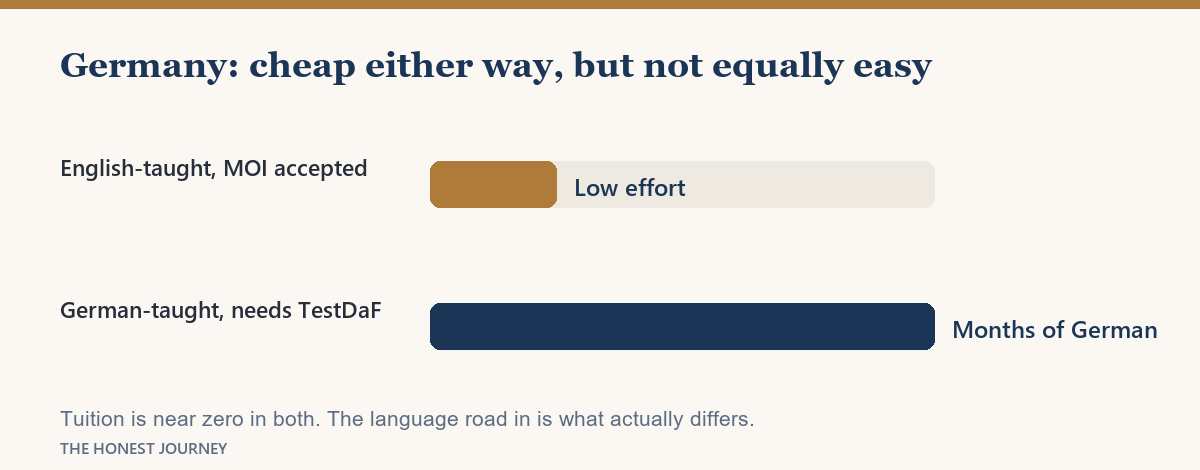
The near-zero tuition is real in both columns. The difference is whether the language standing between you and the classroom is an MOI letter or a year of German study.
The requirement that is easy to miss
Two admission details trip up Indian applicants to Germany, neither of them about English.
The Class 12 percentage. From the Winter Semester 2026/27 intake, undergraduate applicants generally need a minimum of 70% in Class 12, assessed against the Anabin database that Germany uses to recognise foreign qualifications. This is separate from any language question and it is a hard gate.
The APS certificate. Indian applicants to Germany go through the APS, an academic verification of your documents, before the visa. It is a real step with its own timeline, and it is unrelated to English but easy to forget when you are focused on the language question.
Neither of these is an English requirement, which is exactly why applicants chasing the no-IELTS headline miss them.
Why this matters for your money
Germany’s appeal is that it is cheap, so the money logic is different from the UK or US, but it still applies.
The near-zero tuition is real, which is why the honest risk here is not overpaying, it is misjudging the language and losing a year. An applicant who enrols in a German-taught programme assuming they can get by, then cannot follow lectures or pass exams in German, has spent a year and a blocked-account deposit for nothing. The blocked account alone ties up roughly ₹11 to 12 lakh, and while it is your money, it is your money frozen while the plan either works or does not.
Get the language of instruction right and Germany is one of the best value decisions in this entire space. Get it wrong and the free degree becomes an expensive year. The cost of studying in Germany and the Germany student visa guide cover the rest.
Frequently asked questions
Can I study in Germany without IELTS?
Yes. Over 200 German universities accept a Medium of Instruction letter, TOEFL, PTE or Duolingo instead of IELTS for English-taught programmes. But many German programmes need no English test because they are taught in German, which requires TestDaF or DSH instead.
Does without IELTS mean the course is in German?
Often, yes. A large share of German programmes that ask for no English test are German-taught, especially at undergraduate level. They require proof of German through TestDaF or DSH, which is harder than IELTS. Always check the language of instruction for the specific programme.
Is a Medium of Instruction letter enough for Germany?
For English-taught programmes at most of the 200-plus universities that accept it, yes, and it generally satisfies the visa too. It is not relevant to German-taught programmes, which need German proficiency rather than English.
What is TestDaF and is it harder than IELTS?
TestDaF is a standardised test of German for academic admission. For a native or fluent English speaker with no German, reaching the required TestDaF level is a much larger undertaking than IELTS, often many months of study, which is why a German-taught no-IELTS programme is not the easy option it appears.
What Class 12 percentage do I need for Germany?
From Winter Semester 2026/27, undergraduate applicants generally need at least 70% in Class 12, assessed via the Anabin database. This is separate from any language requirement and is a firm gate.
Do I need IELTS for a German student visa?
Generally not, if your university admitted you on an accepted alternative for an English-taught programme. Germany’s system is more forgiving than the UK’s on this. Confirm with the specific university and the mission handling your visa.
The honest closing
Germany is genuinely one of the best places in the world to study without IELTS, for the right applicant on the right programme. Near-zero tuition and broad acceptance of MOI letters for English-taught degrees is a real, honest opportunity.
The trap is not the waiver. It is the word “without”. A German-taught programme is technically without IELTS, and it is the opposite of easier, because it demands a harder language test most Indian applicants are nowhere near passing. The pages selling the free German degree rarely draw that line clearly.
So draw it yourself. Confirm the language of instruction for your exact programme before anything else. If it is English and they accept your MOI, Germany is a superb decision. If it is German, know that you are signing up for TestDaF, and decide whether that is a road you actually want to walk. For the full destination picture, see the study abroad without IELTS hub.