Short answer. Canada is one of the few destinations where the second intake is not an afterthought. Its Winter intake is genuinely strong, which is good news. The bad news is that since 2024 the intake you pick sits on top of a study-permit cap, and that changes the honest advice about timing.
This page covers the three Canadian intakes, why Winter is more useful here than “Spring” is elsewhere, and how the study-permit cap and the provincial attestation letter now interact with your intake choice.
The same decision, by country
The intakes work on a different calendar in every country, and the honest catch is different in each. If another country is on your list, start there, or see the study abroad intakes hub.
- The full Fall vs Spring decision
- intakes in the USA
- intakes in the UK
- intakes in Australia
- intakes in Germany
The three Canadian intakes
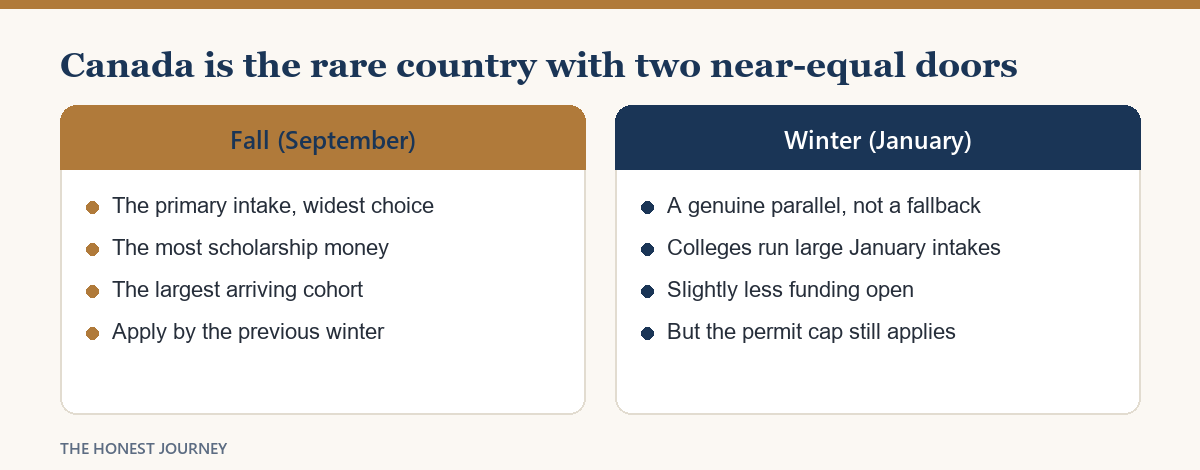
Fall intake (September). The primary intake. The widest choice of programmes, the most funding, and the largest cohort. The default, and usually correct.
Winter intake (January). Canada’s standout second window. Many colleges and universities admit a full slate of programmes in January, far more than a typical US Spring. If Fall does not work out, Winter is a real plan, not a fallback.
Summer intake (May). The smallest. A limited set of programmes, mostly at colleges, and rarely the right choice for a degree-seeking international student.
Faz's ruleCanada is the rare country where January is a first-class intake, not a consolation. If you finished late, Winter here costs you far less than Spring would elsewhere.
The Winter intake genuinely opens a wide slate of programmes in Canada. That flexibility is real. What has changed is everything sitting on top of it, namely the permit cap.
Why Winter works better in Canada
In most countries the January intake is a thin second option. In Canada it is close to a genuine parallel, and there are concrete reasons.
Canadian colleges, which many Indian students choose for their career focus and post-graduation work pathway, run large January intakes by design. University master’s and bachelor’s programmes offer Winter entry more widely than US universities offer Spring. And because the Winter cohort is substantial, you are not arriving into an empty campus mid-year. The trade-offs still exist, fewer scholarship cycles and a slightly narrower course list than Fall, but the gap is smaller here than anywhere else.
The study-permit cap changes the timing maths
This is the part no older intake guide mentions, and it matters more than the Fall-versus-Winter choice itself.
Since 2024 Canada has capped the number of study permits it issues, and applicants now need a Provincial Attestation Letter, a PAL, from the province before they can even apply for the permit. Provinces receive a limited allocation of these letters, and they get used up through the year.
The honest consequence for intake planning is this: picking a less-crowded intake does not help you if the province has already exhausted its attestation letters for that period. The bottleneck has moved from the university to the government allocation. So the old logic of “apply for a quieter intake to dodge competition” is weaker now. What matters more is applying early within whichever intake you choose, so your PAL and permit are processed before allocations tighten.
| Intake | Starts | Course choice | Honest note |
|---|---|---|---|
| Fall | September | Widest | Primary intake, most funding, apply by the previous winter |
| Winter | January | Broad, a genuine second option | Strong in Canada, but PAL allocation still applies |
| Summer | May | Limited, mostly colleges | Niche, rarely right for a degree seeker |
Faz's ruleThe permit cap means early beats clever. Applying early inside your chosen intake now matters more than trying to game a quieter one.
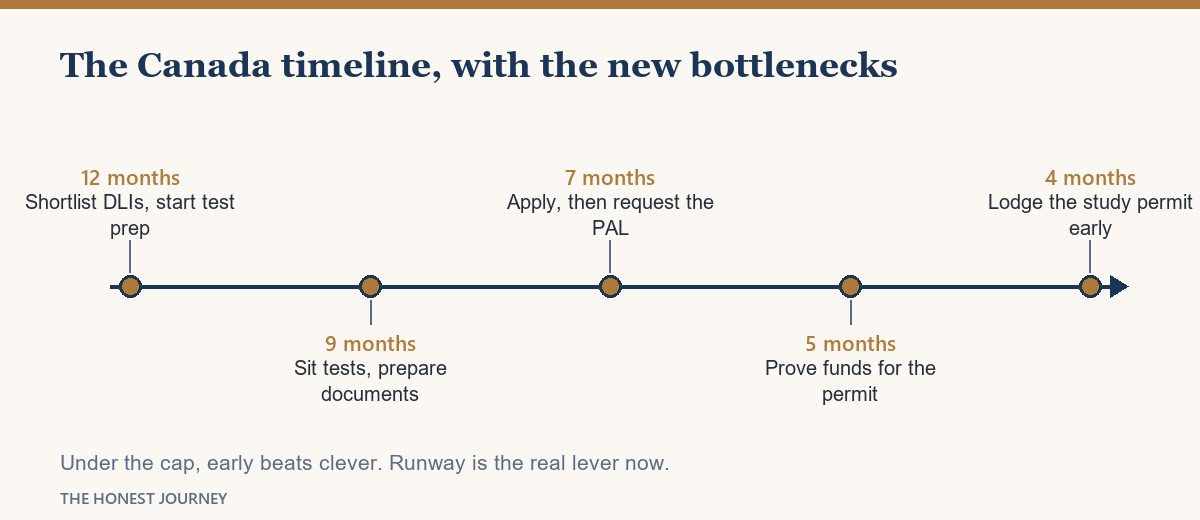
Under the cap, the province can run out of attestation letters regardless of which intake you picked. Runway is the real lever now, not intake arbitrage.
The Canadian timeline, counted backwards
Work back from your start month, and build in extra room for the PAL and permit steps.
About 12 months out: shortlist Designated Learning Institutions and start test prep. 9 to 10 months out: sit tests and prepare your statement of purpose and recommendation letters. 7 to 8 months out: apply and secure your offer, then request the Provincial Attestation Letter. 4 to 6 months out: pay tuition deposit, prove funds, and lodge the study-permit application, since processing plus the cap make this the step to never leave late. Our page on student visa rejection reasons covers where permit applications break.
The traps to avoid
Treating the cap as someone else’s problem. It is now the single biggest variable in Canadian student planning. Confirm your province and institution can issue a PAL for your intake before you commit money.
Assuming Winter has full scholarship parity. It does not quite. Course choice is broad, but the biggest funding cycles still favour Fall. If funding is central, lean Fall.
Leaving proof of funds and the permit late. Under the cap, a late permit application is the most common way a confirmed admit still does not travel.
For whether the whole plan pays back, read it alongside the best country to study abroad, which weighs Canada against the alternatives honestly.
Frequently asked questions
How many intakes does Canada have?
Three: Fall (September), Winter (January) and Summer (May). Fall is the primary intake with the widest choice, Winter is a strong second option in Canada, and Summer is limited and mostly offered by colleges.
Is the Winter or January intake good in Canada?
Yes, more so than in most countries. Canadian colleges and many universities admit a broad slate of programmes in January, so Winter is a genuine parallel intake rather than a thin fallback. Funding cycles still slightly favour Fall.
Does the study-permit cap affect which intake I should choose?
It changes the logic. Because provinces have a limited allocation of attestation letters that deplete over time, applying early within your chosen intake now matters more than picking a quieter intake. Confirm PAL availability for your province and institution before committing.
When should I apply for the Fall intake in Canada?
Around twelve months ahead. Shortlist and prepare tests a year out, apply seven to eight months out, then move quickly on the attestation letter and the study permit, which are the slowest steps under the current cap.
Which intake has the most scholarships in Canada?
Fall. The largest funding and assistantship cycles are built around the September cohort. Winter offers broad course choice but somewhat less funding, so weigh that if a scholarship is central to your plan.
The honest closing
Canada rewards students who understand two things: its Winter intake is a real, wide-open option, and its study-permit cap has quietly become the thing that actually gates your plans. The first is genuinely good news. The second means the old game of dodging into a quieter intake no longer buys you much.
Pick Fall or Winter on the merits of course choice and funding, then treat the attestation letter and permit as the real deadline. Apply early inside whichever intake you choose, prove your funds cleanly, and lodge the permit the moment you can. In Canada today, that runway matters more than the intake label on it.