Cluster FAQ
What's the realistic total cost of studying abroad, not just tuition?
Tuition is roughly 40-60% of the real bill. Add living costs, forex stress on the rupee, visa funds proof, blocked-account requirements (Germany €11,904 per year), health insurance, language certification where required, return airfares, and the opportunity cost of the Indian salary you forgo. For a 2-year US master's, all-in is typically Rs 85L-1.4Cr. For a 2-year German public-university master's, it is Rs 14-22L. The line-item breakdown is in Cheapest Country to Study Abroad for Indian Students.
How should I structure the funding mix: loan, scholarship, family savings?
A clean structure for most middle-class Indian families is: 40-60% education loan, 20-40% family savings, 5-20% scholarship or merit aid. If the loan share exceeds 70% of total cost, the EMI typically eats 50-70% of starting take-home, and the plan has no margin for slow starts. If scholarship is your primary plan (over 60% of cost), name the specific award you are targeting and the historical applicant pool size. "Hoping for a scholarship" is not a plan.
Is a cheap country really cheap once language and bait-course risk are factored in?
Often not. Germany requires A2-B1 German for most professional employment outside English-medium tech roles, and the language certification adds Rs 1-2 lakh and 9-15 months. Private colleges in Malaysia, Poland, and Cyprus advertise low tuition but have weak employment outcomes for international students, turning a Rs 18 lakh "cheap" degree into 3-4 years of underemployment. "Cheap on paper" is real only when paired with the right language plan, the right institution, and the right field.
How do I stress-test my plan against rupee depreciation?
Take your repayment math and model two scenarios: rupee at current rate, and rupee 15-20% weaker against your destination currency over the next 4-7 years. The historical INR-USD trajectory (roughly 30% depreciation over the last decade) makes the weaker-rupee scenario the realistic case, not a stretch. If your loan EMI math breaks under a 15% weaker rupee, your plan is over-leveraged. Either reduce the loan size, pick a cheaper destination, or wait until savings cover more of the gap.
Are scholarships realistic for me, or am I planning around a low-probability event?
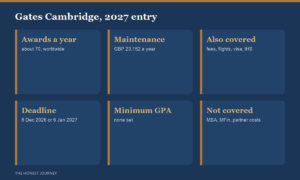
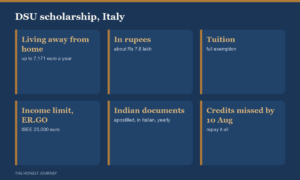
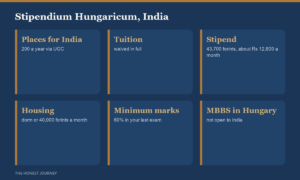
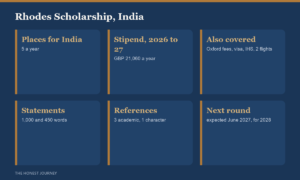
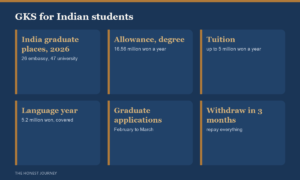
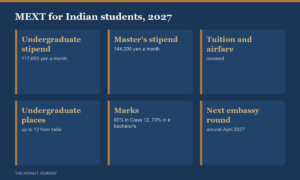
For Indian undergraduate students, fully-funded scholarships are extraordinarily rare. The Lester B Pearson Scholarship (U of T), Schwarzman (graduate only, distinct from UG), Karta Initiative, and need-based aid at Harvard, Yale, MIT, Princeton, and a handful of US LACs are the realistic short list. Acceptance odds typically run in the low single digits per cohort. For postgrad, the named scholarships (Fulbright-Nehru, Inlaks, Commonwealth, Chevening) are also competitive but more numerous. See Scholarships to Study Abroad After 12th for the realistic short list and acceptance odds.
When is the answer "wait two years, save, and go later"?
When the loan share would exceed 65% of total cost, when you do not yet have the test scores or grades that unlock merit aid, or when your destination's policy environment is mid-cycle change (Canada in 2024-2026, UK post-2024 dependent-visa rules, Australia post-2024 PSW shifts). Two years of waiting can add Rs 8-15 lakh in family savings, lift your profile through work experience, and let the destination policy stabilise. The cost of waiting is usually less than the cost of going underprepared with maximum leverage.